Saturday, November 5, 2016

10 Free Yet Overlooked Google Tools For SEO Professionals

google tools

Do you consider yourself an SEO professional? Are you an online business owner who's interested in this form of marketing?

If you have any interest in search engine optimization, there's no time to sit back and wait for the competition to pass you by. Instead, you need to be proactive, implementing the best tools, tracking your progress and staying current with search engine changes.

In the past, I've discussed a variety of tools that you can use to boost your online presence, reach a larger audience and take your revenue to the next level.

For example, my recent post on the top free Google Tools for Content Marketers was a big hit. Not only has it been shared more than 2,200 times, but it's generated nearly 100 comments.

Due to the popularity of that post, I decided to create another, with a similar format.

This time around, I'll examine 10 of the top Google tools for SEO professionals. However, I'm moving past the most well-known tools. In other words, you won't find the Keyword Planner Tool, Google Analytics or Google Search Console on the list.

Instead, I want to share tools that you may not be using, but that could have a huge impact on what you do.

Let's get started!

Did you know that approximately 60% of searches now come from mobile devices?

Ten years ago, it would've been hard to believe that this day would come. However, it's here. And, it's here to stay.

As somebody interested in SEO, it's important to understand the impact that this can have on your website. Google has made it clear that your website should be mobile friendly, so this isn't something you should take lightly.

Fortunately, the search engine giant is doing its part to make your life a bit easier. With the help of the Google Mobile-Friendly Test tool, it only takes a couple seconds to determine if your website is mobile friendly or not.

After you enter your URL and click "Analyze," you want to see something that looks like this:
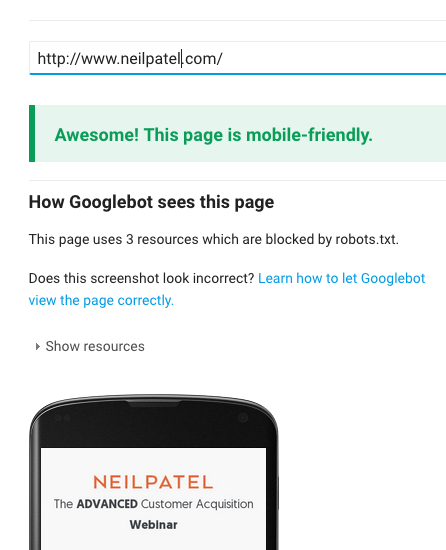
image05

image05

As you can see, there's no gray area. You're website is either mobile-friendly or it isn't.

If your website fails this test, don't waste another day before making the necessary changes. A mobile-friendly version of your site could do wonders for your search engine rankings, as well as the amount of organic traffic that you generate.

Local SEO is big business. If you're a local company looking to drive business online, you need to implement a sound strategy, built around search engine optimization.

For most, this starts with Google My Business. With a business listing, you're in position to provide prospective customers with more information on your company, including business hours, location and contact phone numbers.

Consider this statistic, shared by Social Media Today: local searches lead 50% of mobile visitors to visit stores within one day.

Creating a Google My Business listing does not guarantee online or foot traffic, but it definitely moves you in the right direction.

Here's an example of how a listing appears on the web:

image01

image01

Your listing may not look like this on day one, as it can take some time to get up to speed. For example, you'll want to add more photos, as time goes by. Along with this, you'll hope to consistently generate positive reviews.

Google My Business isn't a tool for all business owners, but it's one that local companies can take full advantage of.

Is a fast website really that important?

Well, it all depends on what you're trying to accomplish. If you want to find your website at the top of the search engine rankings, this is a must. And, if you want to best serve your visitors, it's also a good idea.

In other words, you want your website to be as fast as possible.

How fast the content on your website loads will have an impact on your rankings and how users interact with your site. This is why you need to ensure that your website is moving as quickly as possible, at all times.

Thanks to the Google PageSpeed Insights tool, you never have to guess whether or not your site is up-to-par, in regards to speed. Instead, it helps you to make your website fast on all devices.

Running an analysis will provide the following:

image03

image03

Be sure to check both the desktop and mobile tabs, as you want to make sure your website is up to speed on every device type.

Furthermore, Google provides advice on things you should fix. By taking this information to heart, you may find a few ways to quickly increase the speed of your site.

Are you the type of person who wants to go above and beyond, when researching keyword data?

If you fit this mold, like me, there are a few tools that can help you generate the best results. Google Correlate is one of them.

With this, you can uncover search patterns that "correspond with real-world trends."

In other words, it provides keywords that are typically searched together. For example, maybe you run a search for "fat loss."

You know that there are many keywords based around this subject matter.  But, this tool shows you the ones that most closely correspond with your primary keyword.

image00

image00

If you have a strong interest in uncovering the best long tail keywords for any subject, the Google Correlate tool can be your best friend. Do yourself a favor and experiment with this, before writing your next blog post. It may help you find a unique angle that you had previously overlooked.

A very powerful tool that is often overlooked by online marketers, Google Trends can help you touch on topics that are popular, right now.

In addition to exploring "Featured Insights," you can also run a search for any topic or keyword that comes to mind.

For example, maybe you have a blog about social media. For this reason, you'll want to stay current with the latest and greatest, in regards to Facebook and Mark Zuckerberg.
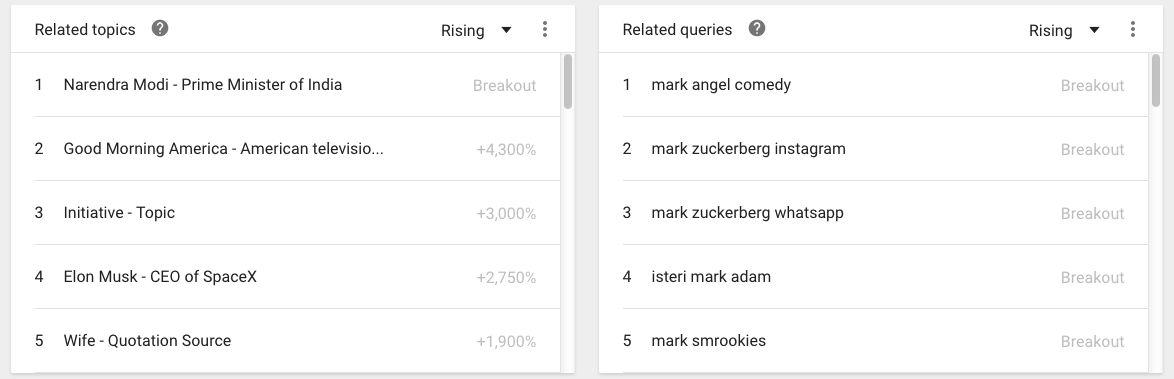
image09

image09

While the right column provides information related to Zuckerberg, I want you to pay close attention to the details in the left column, as well.

With a list of related topics, you can quickly come up with new ideas for future blog posts. Maybe you're covering Mark Zuckerberg today, but tomorrow you can work in a mention of Elon Musk.

Google Trends doesn't always provide data that you can use to your advantage.  But, from an SEO perspective, it's well worth using on a regular basis. You never know when it'll help you unearth that one topic that pushes a load of traffic to your website.

What does a web browser have to do with SEO?

If you find yourself thinking that one browser is the same as the next, change your thinking. Here's why: Google Chrome has a variety of SEO extensions that can help you make better decisions about your online marketing strategy.

For example, the SEO & Website Analysis extension is one of the best you'll find. With this, you can instantly pull an SEO report for any website.

Not only does this provide the opportunity to track the impact of your SEO strategy, but it does the same for your competition. As a result, you'll gain a better understanding of what you need to do, in order to move to the top of Google for your target keywords.

image06

image06

(via SEO & Website Analysis download page)

If you're open to using Google Chrome as your browser, make sure you're also open to downloading a few SEO extensions. Once you find the one that suits you best, you may be surprised at how often you rely on it.

Just as it is with Google Chrome, you may not fully understand how this tool can help you reach your SEO related goals.

However, the more you use Google Alerts, the more creative you'll get.

One of the best things you can do is set up an alert for your top three to five competitors. This way, you'll receive a notice, any time that they are mentioned by an online outlet.

Why is this important?

For one, it allows you to keep a beat on your competition and what they are doing. And, it gives you the chance to chase after the same type of coverage.

There's nothing wrong with tracking the publications and bloggers that regularly cover your competition. Once you have a solid list in place, reach out to the appropriate party and pitch your company.

If you have something of interest to offer or if you can prove that your company is just as important as your competitors, don't be surprised if this leads to positive coverage and possibly a link back to your site.

Using Google Alerts is as simple as typing in a topic and reviewing the "Alert preview."
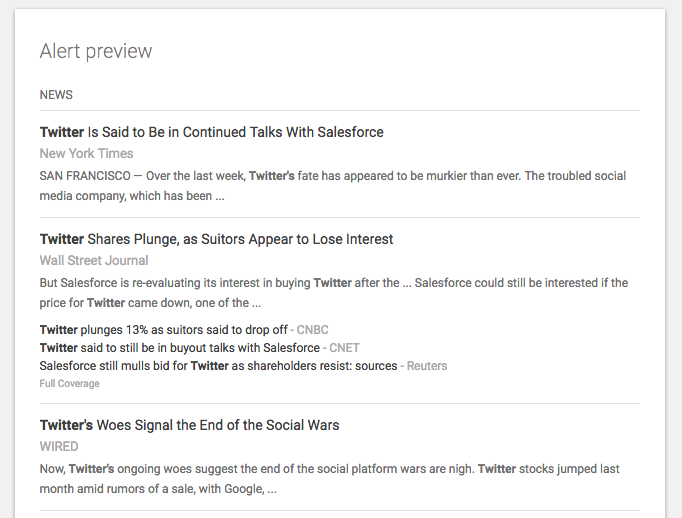
image04

image04

If you like what you see in the preview, it's time to create the alert and wait for the updates to roll in.

What is your primary goal, in regards to SEO and your website?

Like most, the answer is simple: to drive as much qualified traffic as possible.

But, remember this: there's more to a successful business than increasing website traffic. You must have a plan for converting these people into customers.

Depending on your business, you may be the type who needs to jump on the phone with prospective clients. In this case, you know how important it is to be readily available at all times.

This is where Google Voice comes into play.

With this tool at your disposal, you gain access to one number for all of your phones. So, if you have more than one business line, for example, you can use Google Voice to bring them all together.

Furthermore, it offers free long distance, a simplified voicemail system and competitive rates on all international calls.

If you're wondering what else you can do with Google Voice, consider the following:

  • Send text messages directly from your computer.
  • Create personalized greetings to customize the callers' experience.
  • Share voice mails and read transcriptions online.
  • Receive calls from any phone.
  • Getting started is as simple as requesting a new number or using an existing mobile number.
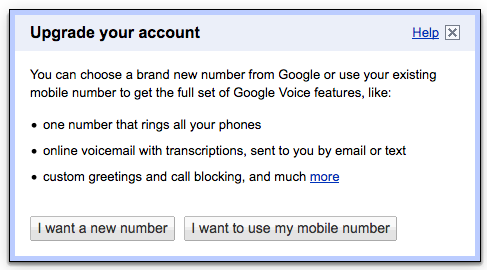
    image02

    image02

    From there, follow the prompts and you're account will be set up in no time.

    You may not consider this to be a traditional SEO tool.  But, in many ways, it's extremely important to the success of your marketing plan.

    With so many SEO tools to choose from, you may find yourself gravitating towards those with the best reputation for providing a high level of features.

    While there's nothing wrong with turning your attention to SEO tools, sometimes it's best to get back to the basics. This is particularly true, if you're new to SEO and want to keep a close watch on everything that you're doing.

    Time and time again, I tell people to use Google Sheets for various SEO related tasks. These can include:

  • Creating a content calendar for your blog.
  • Tracking the keywords that you have targeted in the past, as well as those you want to touch on in the future.
  • Tracking the number of links to your site, including where they come from.
  • Along with the above, Google Sheets can also come in handy when you're sharing SEO duties with other people.

    For example, you may want to collaborate on long tail keyword selection. Rather than send hundreds of emails back and forth, create a Google Sheet and share the information. This helps to keep everyone on the same page, at all times, thus avoiding overlapping work and potential mistakes.

    Although a blank spreadsheet is typically the best way to start, you may want to choose from one of the templates that's provided by Google.

    image07

    image07

    It's not the most powerful SEO tool, but Google Sheets is one of those simple things that can have a big impact on your business.

    Do you remember when Google acquired YouTube for more than one billion dollars?

    It's been more than 10 years, so I don't blame you if you've forgotten that the biggest search engine company in the world is the owner of the biggest video sharing website (and 2nd biggest search engine in the world).

    If you have your eyes set on developing a comprehensive online marketing and SEO strategy, it's essential to get involved with the creation and distribution of video.

    There are many benefits to dedicating most your video marketing resources to YouTube, including the fact that it has the largest user base of all video sharing services.

    And, YouTube videos often rank high in Google's search results.

    So, even if you struggle to push your website to the top of the rankings, you may be able to have success with your YouTube videos. With this approach, you know that you can get your content in front of an audience of people who are interested in what you have to say.

    If you want to see just how powerful YouTube can be, browse some of the most popular channels in your space. By doing so, you'll get a better idea of what has worked for others and that can help you develop a strategy for your own online property.
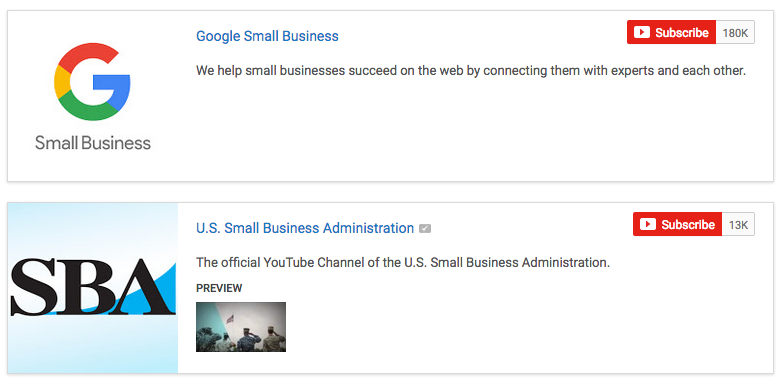
    image08

    image08

    It doesn't matter if you're doing SEO for a local company or a national brand. It doesn't matter what you've done in the past or what you hope to accomplish in the future. The use of one or more of these tools will definitely change your approach for the better.

    Did you know that nearly 60% of B2B marketers say that SEO has the biggest impact on lead generation?

    If you feel the same way, now's the time to examine your SEO strategy, to ensure that it's in good working order.

    What do you think about this list of free Google tools? Have you used any of these in the past? Share your feedback in the comment section below.


    Source: 10 Free Yet Overlooked Google Tools For SEO Professionals

    Friday, November 4, 2016

    It's Always The Agency's Fault If Your Inbound Marketing Isn't Working

    Blame for Inbound Marketing Failure.jpgThe headline was meant to get your attention. It's very rarely the agency's fault even though that's usually where the blame gets placed. When you think about it, how could it be the agency's fault? If the people at the agency didn't know what they were doing, they wouldn't have any clients. So, they must know something.

    But what I don't understand is why it matters whose fault it is and why blaming anyone is productive. Instead, let's put our energy into identifying why your inbound marketing isn't working and what we need to do to fix it, and then get it back on track delivering leads and new customers for your business.

    Here are some common causes of failed inbound marketing and what to do about it.

    You Keep Changing Your Mind And Direction

    I know, it's a CEO's right to change her mind. Sometimes you should pivot to take advantage of opportunities in the marketplace. I get it. No one is saying change isn't productive, but you need to keep in mind that changing direction means starting over again from a marketing perspective. You just need to know that.

    In some cases, it's not about big strategic direction shifts. Sometimes, it's about more tactical marketing shifts. If we've gotten your approval on a website and we're working on it, but you change your mind and want different messages, that's going to take rework and might impact more than copy creation. Again, this might be a positive course correction, but the change is going to require your marketing team or inbound marketing agency to redo work that's already been done. This impacts you budget, your results and the effectiveness of your overall campaign.

    The more you can stay the course, the better results you'll realize in the shortest amount of time.

    You Want To Tell Us What To Do

    I understand, you've achieved a level of success by doing things your way. That's impressive. But we're doing inbound marketing. How many successful inbound marketing programs have you planned, built, optimized and delivered? More than likely, this is your first experience with inbound marketing. That's why you bring in an expert because they have skills, experience and learning you (and your internal team) do not.

    Since you're paying the bill, in the end, we'll do exactly what you tell us to do. In our case, we'll tell you what we think, what you should do and why. But if you tell us to do it your way, it's your company, so we'll oblige. However, if the results don't follow, make sure you realize how you contributed to the less-than-expected results.

    You Underbudgeted Marketing Based On Your Big Goals

    ThinkstockPhotos-161954599.jpgLet's say you have a $10 million company and want to do $20 million in revenue next year. You need a lot of leads to reach that extra $10 million. However, you only budgeted $2,000 a month for marketing. News flash! You're not getting to $20 million in 2017 on $2,000 a month. You're not getting to $20 million if you have anything less than 10,000 visitors to your website a month. You're not getting to $20 million if you have less than 500 leads a month.

    How did you come up with a revenue target like that? Don't tell me. I know. Instead of pulling it out of thin air, use your current marketing metrics to create a more attainable goal and then match the goal with a realistic marketing budget. Most businesses that are growing spend between 1% and 5% of total revenue on marketing. At $10 million that's $100,000 to $500,000 a year. The more you spend, the higher your goals can be. If you've underinvested in marketing, you might be underwhelmed by the results.

    Your Marketing Team Might Not Know What To Do In This Scenario

    Inbound marketing is NOT one size fits all. What worked at Company A might not work at your company. What did well for Company B might not work as well for your company. On the flip side, you might have something that works well but wouldn't move the needle at all with Company A or Company B. Every inbound program is different because every company is different and every client (individual) is different.

    You need to make sure your team (internal or agency) can analyze your situation, review the data and make some assumptions, respond to the data with a course of action and then implement the action plan. The results will cause another series of actions and repeatedly. This cycle is pivotal for getting inbound to work. The faster you can cycle, the faster you'll get results.

    You Or Your Team Might Have Skipped Steps Or Taken Shortcuts

    Inbound marketing requires a series of defined steps to make it work. If you skip them, it's not going to work as well. The steps we see skipped most often include strategy and planning steps. If you don't spend time working on your messaging, stories and differentiation, it won't matter what tactics you deploy because you're going to be saying the wrong things to your prospects.

    Another step that's often skipped is the step that tightly orchestrates all the inbound tactics together. For example, you can't build a website without knowing what keywords you want to be found for, what content you're going to create and what conversion approach you'll be taking on the site. Search, web, content (long, short and mini) and conversion tactics all need to be sewn together perfectly for them to produce results.

    The last step I see skipped is the optimization step. Most people think you build all the assets, get them out and then sit back, reaping the rewards. Nope. It doesn't work like that. A whole host of adjustments, tweaks, upgrades and modifications will need to be made based on program data. You'll have to analyze the performance, identify underperforming areas and then run a series of tests to improve performance. You should be planning on doing work like this every month.

    Your Team Or Agency Might Not Have Enough Experience

    You might not know you need this optimization phase of the engagement if you've only implemented three or four inbound engagements. To master anything you need 10,000 hours under your belt. Inbound is no different. If your team only has experience with one or two other engagements, it's likely going to be learning on your dollar. If your agency only has five or six inbound clients, it's likely to be learning on your dollar. If you're OK training these people and watching them make mistakes with your program, you should be good to go.

    But if your expectation is that you're bringing in experts, make sure your experts are actually experts. This means they need to have experience with hundreds of engagements, not 10 engagements. This ensures they've seen it all, and when they see an issue with your program, they'll know how to fix it. We went from page two to page 10 on Google because we changed a website URL. The change made sense, so the only way I'd know its impact on rankings would be from making the change and experiencing the drop. I also know how to fix that situation now because I had to fix it for us. This is knowledge you only get from doing.

    You can see there are a lot of places your inbound marketing can go off the rails. There is risk associated with any marketing, but with new marketing methodologies, sometimes the risks are larger. The key is to work hard to mitigate any risks with solid planning and contingencies.

    One of the best ways to mitigate the risks around inbound marketing is to work with a partner that is going to help you, not do what you want. This might sound extreme, but vendors (companies that do what you want) are a dime a dozen. Partners (companies that are going to work with you, help you, get to know you and have your best interests at heart) are hard to find.

    The other major way to mitigate the risks is to work with a company that has extensive experience delivering the same results you're striving for. If those results are leads, great. If those results are new customers, great. If they're new visitors to your website, great. But make sure those results have been delivered, repeatedly. Cheap doesn't ever equal good in my experience. Four experiences are not even close to 40 and 40 experiences aren't even close to 140 when it comes to a team's ability to deliver results with inbound marketing.

    Start Today Tip – If you're not seeing results, you need to move into evaluation mode. What's causing the lack of performance? Look in the mirror first. Honestly, most of the time it is you. Three of the items above are about you. If you change your mind every month, you'll get limited traction; it's like starting over every couple of weeks. If you underbudgeted, you won't hit your goals because you're not doing enough. And if you can't help but tell your team what to do, you don't have anyone but yourself to blame. Make sure these situations are not going on in your engagement before you start trying to place blame. Then, instead of blaming, work to figure it out and adjust. You'll see results if you stick with it and focus on the execution.

    Square 2 Marketing – Inbound Results Start With ME!


    Source: It's Always The Agency's Fault If Your Inbound Marketing Isn't Working

    Thursday, November 3, 2016

    Web App Designers and Teams Need, and Will Love

    Online apps can do many things faster than offline tools. This is particularly true for task management. While using these apps can lead to significant gains in productivity, they still can't do all the work.

    Hence, let's start with some good tips and principles.

    These Productivity Tips for Web Designers are Worth Remembering

    Clarify Expectations – This includes communicating priorities. If this is not done, or the expectations appear ambiguous, or are poorly stated, it can lead to unintended outcomes.

    Keep Communications Open – Honest dialogue is always helpful. When communications are kept open, productivity issues tend to disappear. Except in those cases where the person is the problem.

    Team Members

    Give Team Members Autonomy – Give team members value-added tasks, and give them permission to make decisions. Designers like to feel they have ownership of the tasks assigned to them. This is true for entrepreneurs, but it can be lacking in teams. Giving team members autonomy usually results in superior performance.

    Rethink Meetings – Meetings are needed to share information, but, at the same time, a meeting can be a tremendous time suck. A good approach is to check over the meeting's agenda, and make sure it supports project objectives.

    Reserve Downtime – This is especially important for team morale, but it is a practice that the individual web designer will profit from as well.

    Principles to Remember
  • Block off time for work and time to rest. This is also important for entrepreneurs.
  • Keep reports advised of project status; it keeps them informed and accountable.
  • Communicated when extra hours will be needed and when they won't. Unpredictable work schedules can be productivity sucks.
  • Never micromanage. The person doing the real work is usually the expert, but always check to see if they need assistance or resources.
  • And here are the Web Apps That You Will Love Using InVision

    Invision App

    InVision offers concrete solutions to many of the problems facing web designers as they go about their daily prototyping, collaborating, and task management activities. InVision is a productivity enhancer. Web designers can upload their static design files, add animations, transitions and gestures, and within 5 minutes, create a high-fidelity prototype.

    Billed as the world's leading product design platform, this web app gives web designers and design teams the ability to prototype, modify and refine, manage, and user test their web and mobile products – all without any need for coding.

    Startups like MailChimp like InVision because it's great for usability testing, and for the way it helps design teams, especially distributed teams, stay in sync. Companies like PayPal and Cisco like InVision because the prototypes created are online; making collaboration and review as easy as it gets. They also like this web apps ease of use characteristic.

    Give InVision a try. It's free, plus you can work with one prototype at no charge as you check out the product and its pricing plans.

    Proto.io

    Proto.io

    Proto.io's ability to enhance design processes by quickly creating interactive prototypes, without the necessity of code, is one reason why this web app is a favorite of individual designers, design teams, and project managers alike.

    The prototypes are realistic, as you would expect. But, since Proto.io is a web app, they can be quickly shared with others, which many consider a definite plus. Proto.io's package includes a library of beautifully crafted iOS, Android, Windows, and watchOS UI components. You also have the option to upload your own Photoshop or Sketch design files.

    Then, it's simply a matter of adding the gestures, animations, transitions, and interactions you want. Sharing a prototype for testing, feedback, or review, takes but a single click.

    Fortune 500 companies, together with smoking-hot startups, have taken to Proto.io. Take advantage of the 15-day free trial, and the odds are great that you'll join the crowd.

    Sendloop

    Sendloop

    Sendloop is a marketing web app. Marketing tools tend to be a somewhat scarce commodity in the web design community, but to have some smarts about marketing is becoming more important every day. Sendloop is an email marketing app, and it is a powerful one at that. It can help your conversion rates, or those of your clients, soar.

    All that is required is to take one or more of Sendloop's 100+ professionally-crafted email templates, brand and customize it, and you are good to go. No special technical expertise is required, nor is coding. The only other thing needed is a subscriber list. For $9 a month, you can send an unlimited number of emails to up to 500 subscribers.

    There are several pricing plans available, including the Sendloop Whitelabel/Agency Program.

    Paymo

    Paymo

    Paymo is a modern project management app for small and medium businesses. Paymo allows you to reduce meeting times, so you can get your projects done faster. It keeps you up to date with team progress, billable hours, and milestones. Data saved means fewer needs for guestimates for future projects.

    Features include visual Kanban boards, Gantt charts, file sharing, milestone tracking, and invoicing. This app is ideal for the design team who does not wish to be tied down to the business side of web design more often than is necessary.

    Try Paymo for 15 days for free.

    MeisterTask

    Meister Task

    MeisterTask is smart, agile, and visual. Its flexible Kanban project boards adapt to your workflow to make sure all your team members are always on the same page. With MeisterTask, task management has never been easier, or more intuitive. A quick glance at its customizable dashboard is a great way to start a productive day.

    As a bonus, MeisterTask integrates seamlessly with MindMeister, an online mind-mapping app that allows you to brainstorm your creative ideas with others in real-time. This web app should also appeal to the individual web designer who is looking for a better way to keep his house in order.

    Form Analytics by Use It Better

    Form Analytics

    If you sell online, you could be losing customers because of your site's forms. This is all too common, but it doesn't have to be that way.

    Form Analytics by Use It Better is an online app you can use to collect and analyze form data. You can tell which fields were completed and which were not; and at what point forms were abandoned.

    This app drills down to the problem source. Take remedial action, and watch your conversion rates climb again. The metrics you need are at your fingertips. Small-scale users can use this app for free.

    Final words

    These apps are tremendous productivity tools. By heeding the productivity tips offered here, it's much easier to realize the full potential that each of these apps offers. They can't do all the heavy lifting, you still must define what it is you want to manage, but they will still free up more of your time to do what you do best – design.


    Source: Web App Designers and Teams Need, and Will Love

    Wednesday, November 2, 2016

    Create a Complete Loyalty Marketing Strategy

    1-sephora-personalized-loyalty-marketing-example

    Loyalty marketing is the strategy of doing well for your brand by making good with existing customers.

    As the customer journey becomes a nonlinear brand experience that has no set end-date, companies are shifting their focus from one-time offerings to a more long-term relationship.

    This means offering users an individualized experience replete with added benefits. Studies show it takes 10 times the resources to acquire a new customer than to sell to an existing one.

    Brands emphasizing the principles of loyalty marketing are primed to earn not only goodwill and strong brand advocates, but a stronger bottom line. Our beginner's guide to loyalty marketing is going to walk you through every aspect of this strategy so you can see high returns and provide a rewarding experience for all.

    You'll learn about key tactics to effect a powerful multichannel strategy across email, mobile and web. We'll look at how to structure and test rewards programs, how to personalize your messaging and produce stellar content.

    Let's see how to improve our customer engagement and increase repeat purchases with loyalty marketing!

    What is Loyalty Marketing?

    Loyalty marketing is a strategic focus upon growing and retaining your existing customers through incentives. The goal of loyalty marketing is to reduce the rates of churn and maximize repeat purchasing power within your best and, oftentimes, overlooked customers as well.

    Moving beyond the typical rewards programs such as frequent flyer miles – though these are certainly relevant – loyalty marketing is about optimizing the brand experience for each user segment. Trick is, you need to speak to your audience in the way they want, which is both evolving and variant.

    How can you do this easily?

    By being customer-centric. Each phase of the customer journey, both before and after the first sale and into the next, must satisfy the unique wants and needs of individual users.

    Many companies stumble over loyalty marketing best practices because they're so focused upon acquiring new business. Because the consumer mindset has shifted to desire fewer things but a more rewarding experience from their companies, providing meaningful and sustainable interactions can prove difficult.

    But it's not hard to be a loyalty-inspiring brand. Loyal customers have a higher LTV and also a greater spending average, per purchase.

    You'll also be more efficient with segmented (or soon to be) groups of existing customers. Having a firm understanding of motivations, buying behaviors and purchase histories, your ability to provide a more satisfying brand experience – one that drives repeat business – is closer than you think.

    Creating Content for Loyalty Marketing

    Content drives your brand experience. Preparing to invest in varied styles of media – interactive, blogs, videos, etc. – will pay off with higher levels of engagement.

    Your brand can only inspire loyalty by standing out from the pack. Users don't have time or resources to be loyal to all brands, so make sure content is unique and unlike anything else across your channels.

    However you share your brand experience, from an informative blog read, an outstanding video, a distinctive voice on social media, be sure it is a continuous experience worth staying tuned for.

    An incentivized experience is a valuable experience. Your customers will stay engaged with you if you're offering exclusive content. For example, you could sponsor research in your field or host an invite-only webinar. Experiment with Periscope and position your executive as a thought leader to drive attendance.

    And what better way to stand out from the rest than to stand up for something important?

    Value-driven messaging aligning with a cause or idea can also be effective for keeping users engaged. These days, feeling emotionally and spiritually at home within a brand is a key component of user loyalty.

    1-sephora-personalized-loyalty-marketing-example

    (Source)

    Personalization is a crucial aspect of all content creation.

    Receiving one of a kind treatment is something users will stick around for.

    The Sephora website makes returning customers feel welcome with a customized shopping screen "just for you." To draw repeat guests into new products, items are presented as selected with an individual air of attention and care (which customers crave). The cosmetics brand knows reminding shoppers that they're one in a million is how to increase sales.

    Each product description has the copy "for 'your' body," making the customer-centric idea explicitly felt everywhere. We're even prompted to edit our profile with a smartly-placed CTA that invites us to fix anything we don't like about the page. However, each product is laid out with a benefit statement underneath as well, further helping us know Sephora wants to share their beauty secrets with us. The clean, minimal design aesthetic ensures it all stands out in clean definition.

    Personalize your brand for users by:
  •   Using customer profile data such as name, geographic location
  •   Acknowledging past purchases
  •   Recommending products based on preferences
  •   Recommending products from what user's friends have purchased
  • Personalizing emails and push notifications about sales, promotions and other content repeat buyers would enjoy (these earn 6x the revenue than non-personalized messages)
  • At the end of the day, it's all about making your brand a pleasure to interact with. If every time we log in to our website (like with my PayPal) and we have to see the same "try this new feature" screen that we clearly don't want to use, it degrades the interaction and makes us feel like we're not being listened to.

    Customers will spend their time and money with brands who market them feeling consistently listened to.

    Enhance user experience by:
  • Simplifying payment processes
  • Eliminating messages and data that's relevant to users
  • Making search and navigation easier to use
  • Adding chatbots
  • Tracking users to see where they're spending their time and send them content to match their interests
  • Prioritize Customer Service

    What good is a flawless interface and awesome content if you don't listen when customers need help with purchases or want to voice input about your brand?

    Not much. In order to sustain engagement and retain customers who want to repeat purchases, these people must have confidence in your support staff.

    47% of customers say they are willing to go elsewhere after experiencing poor customer service. Years of loyalty can be undone by one unsavory interaction. Being ever-present in your support is also recommended, as consumers have come to expect it.

    2-referral-saasquatch-personalized-customer-experience

    Research from Forrester shows that 44% of customers place high importance on live chat. Many customer frustrations arrive from not having anyone to talk to in the moment, so 24/7 support chat (whether live or with a chatbot) can make all the difference when assuaging customer concerns and retaining valuable clientele.

    At Referral SaaSquatch we're ready to talk, as the above image shows. However, since there wasn't an issue at hand and I'd been checking on blog content about 5 ways to optimize loyalty marketing, "Cindy" here chimed in to ask about providing me with some additional content. Not this time, Cindy, but thank you.

    Investing in customer service is crucial for ensuring your customers are loyal and also ready to provider testimonials, make referrals and act as brand advocates across social media and toward their friends.

    If the product is great, our customer service is flawless and our content is dialed-in, what else can we do to improve customer loyalty?

    Implement a Customer Loyalty Program

    Customers in loyalty programs have been studied to spend 19% more than those not engaged with a brand in the same way. Another study by Campaign Monitor reveals 65% of consumers admit that receiving rewards contributes to how frequently they make purchases. And 80% of respondents to a recent 3,000+ person survey said they would be more likely to do business with a brand if they offered a rewards program.

    Loyalty programs are valuable for both you and your consumers. Try any variety of incentives such as:

  • Points: Flexible across many offers and many demographics, points allow you to be creative when delivering benefits to your existing customer base.
  • Giveaways: Give your own unique materials or third party materials. Either way, you show users how distinctive your brand is by offering something new.
  • Affiliate offers: Affiliate partners can offer fresh materials for added engagement and spending.
  • Discounts, giveaways, contests: Free is a huge motivator. Drive engagement with relevant offers reaching users through email, mobile and social channels.
  • Value-centric rewards: Aligning your brand offers with the strong values of your user yields positive attitudes and cultivates engagement through a sense of social good.
  • Referral rewards: Reciprocal rewards prompt dedicated users to benefit for repeat spending while simultaneously engaging new users, which naturally injects your campaigns with another way of revenue. Referral incentives pair well with all above offers.
  • Remember: These offers are not limited to loyalty programs. Use these freely amidst your campaign to drive engagement and improve overall UX with your brand.

    3-walgreens-personalized-loyalty-program

    (Source)

    Tiered rewards programs are becoming popular, as they allow you to incentivize future spending with customers while simultaneously rewarding your already high-spenders. This Walgreens "Balance Rewards Program" allocates boldly colored dollar amounts for those who are willing to engage with the brand and make repeat buys.

    "Points equal more rewards" is a succinct, value-intensive headline to announce the benefits to readers while the corresponding value amounts arrest lots of viewer attention at right. This "everything store" retailer makes their FAQ page section an easy read on a well-designed aesthetic. The video is an added bonus some customers are sure to enjoy!

    To grow a segment, brands add tailored promotions to tiered programs encouraging more spending. For example, if you "spend X amount, you'll earn double points" is an example of how to prompt growth in loyal users.

    Acquiring new customers is about spreading hype and value around members' key benefits. Using referral tactics to spread the word is most effective. Lastly, reactivating loyal members that have gone quiet is a key aspect of this program. Members who have stopped engaging are more likely to engage than non-members to respond.

    Luxury brands have long made use of tiered rewards programs. Beyond typical savings, users appreciate superior service and special events. A study by Colloquy shows 62% of mid-level loyalty program members and 57% of upper level loyalty members are motivated by access to special events. Receiving superior service motivates 79% of mid-level and 74% of high-level loyalists.

    4-nordstrom-personalized-loyalty-rewards-program

    (Source)

    Nordstrom utilizes the rewards tiers shown above, with level 3-4 members receiving invites to private photo shoots, face time with designers and specialty tours of watchmaking factories. The black icon at right communicates exclusivity, the purple icon speaks of royalty, the red incites passion and the teal for "Level 1" signals trust and enthusiasm. The bold "Apply Now" CTA at bottom pulls readers in with actionable language to prompt conversions for some awesome incentives.

    Optimize Rewards for Mobile

    5-gilt-mobile-loyalty-campaign-example(Source)

    Online luxury retailer Gilt won't be left out of the loyalty game. The membership service makes good with users here by providing elevated customer experience through push notifications. Messaging is concise, detailed and value-driven, arriving by privilege of user allowance. Gilt knows their customers want their new shoes the moment they're available and pay to be in the loop.

    Since 30% of all e-commerce is mobile these days, it's crucial to reach rewards members via their "right hand" mobile device. What's more, 72% of respondents to a Loyalty Report survey said they preferred their mobile devices as a way of communicating with brands. As well, 59% of respondents said they are "much more" or "very likely" to become a member if the loyalty program had a dedicated app.

    How to Test Rewards Programs

    When tracking your loyalty program's success, keep in mind a few key metrics to gauge performance:

  • Sales: % of sales generated by loyalty program members
  • Transactions: % of transactions when loyalty membership was used
  • Activations: % of members with at least one transaction of set time frame
  • Sales changes: Split test groups/stores/pages that do and do not accept rewards
  • Beyond tracking metrics, you want your programs to start with a bang. So make the most of the first six months of your program launch, letting new members collect heaps of new points to gain traction. Being over-generous can only help your word of mouth marketing and loyalty.

    Be sure that first loyalty redemption is easy and straightforward for users. Creating a memorable and distinctive experience around claiming rewards is the icing on the cake that really makes the difference for your users. If your optimized loyalty program is worth chatting about, you'll earn lots of referrals and organic growth in revenue will follow.

    Conclusion

    The Pareto law is very real when it comes to loyalty marketing: your best 20% of your customers will earn you 80% of your revenues. Investing in your customer experience starts with great content across all channels, otherwise loyalty will be hard to come by. Next, you'll want to personalize your messaging for your user segments, making them feel special and welcome within your brand.

    Anyway you can improve customer experience is a must-do. This includes loyalty programs utilizing creative incentives to drive engagement in current customers and prompt more spending in new members. Be sure to reach your users across mobile, email, social and website channels for a comprehensive brand experience that merits a lifelong commitment.


    Source: Create a Complete Loyalty Marketing Strategy

    Tuesday, November 1, 2016

    3 Content Marketing Mistakes, and How to Fix Them

    Don't let these content marketing mistakes cost your business.

    Content is what convinces customers to take action. It's what causes someone to click on a website or blog post. Ultimately it's also what causes someone to buy, register, download or share.

    If it's not connecting with your audience in a meaningful way, it's hard to keep them invested, and even harder to convince them to read.

    Writing for the web can seem like a wide open, intimidating proposition. But your content may not miss by much. Below are three of the most common content marketing mistakes, and what you can do to fix them.

    Fix These Content Marketing Mistakes, and Your Results Will Improve

    Mistake #1: It's Not Written to Your Reader

    You might have years of experience in your industry. You might even have a specialized education and an advanced degree. You know your stuff inside, and out. That makes you a valuable resource for your customers. Don't forget that. It also makes you prone to some common content marketing mistakes.

    Now, stop writing above your customers' heads. There's a knowledge gap between you and your customers for all the reasons stated in the paragraph above. They don't know what you know about your industry.

    When your reader stumbles while reading your marketing content, it doesn't make you look smart. It drives them away. If you're lucky they'll go to a dictionary. It's more likely however, that they're going to the next search result.

    Here's what you can do to fix this content marketing mistake:

  • Stop using inside industry terms and acronyms. If they absolutely have to be used, define them and spell them out.
  • Have someone outside your industry read your content before it's published to make sure it's relatable.
  • Talk with your customers regularly about their pain points and knowledge base related to your industry. This will keep you in touch with what they know.
  • Marketing copy shouldn't read like an academic dissertation. It should be something your audience can identify with, and a reason that they grow to like you and your business.

    Mistake #2: It Focuses on the Hard Sell

    Recommended for You

    Webcast, November 3rd: 5 Key Steps to Building a Business Case for Your Sales Enablement Team

    The natural instinct for a business writing website copy is to want to sell. But that instinct can lead to trouble. Here's what I mean.

    When a reader finds your website online, they're usually doing so because they have some sort of problem they are looking to solve. They may turn to Google and search some phrase related to this problem, and congratulations, it's your site that pops up!

    The battle is only halfway complete, however. In case you wonder what I'm talking about, you can't pay your mortgage with website traffic. It's not enough to have the largest party. If you're in business, you need the people at the party to buy something.

    However, your customer might not be in the right mindset to buy just yet. Try and solve their problem first. Resist the urge to write content sounds like a used car salesman, trying to convince their prospect to take that test drive.

    Here's what you can do to fix this content marketing mistake:

  • Write about how to fix things related to your industry.
  • Provide consumer advice for shopping around in your industry.
  • Do keyword research to determine what matters the most to your readers, and adjust your content to that.
  • This is one of the easiest content marketing mistakes to remedy. Make sure that you are providing an immense amount of value in all of the content you produce. Remember, they sought you out, and not the other way around. If you jump to the sale too fast, they may not be ready. Work at establishing trust first to fix this content marketing mistake.

    Mistake #3: It's Not Clear What You Want Your Reader to Do

    Your readers may make it all the way to the end of the piece. They may really like what you wrote, and find it useful.

    But if they're not buying, or they're not taking the action you intended for them to take, it can still be frustrating. Did you make it as easy as possible for people to take the action you wanted them to take?

    Here's what you can do to fix this content marketing mistake:

  • Ask people to take one action at the end of every marketing piece (including blog posts). There are more calls to action than to simply buy: download, contact, register, sign-up, share and comment are all perfectly acceptable requests.
  • Include "buy now" or "contact now" buttons in various locations on pages with a longer body of content.
  • Test the wording on various calls to action within your content. Repeat the ones that have a high success rate.
  • Calls to action add clarity and a sense of direction for your reader. If you've done your job and provided value to your reader, a well-worded call to action can have a significant impact.

    Conclusion…

    Remember, design guides readers through the marketing experience, but it's the content that dictates readers' action. Make sure you are doing everything you can to improve your readers' experience. It's the best way to turn them into customers.


    Source: 3 Content Marketing Mistakes, and How to Fix Them

    Monday, October 31, 2016

    The Web Shop Offers Simple and Affordable Web Design and SEO Marketing Services

    The Web Shop provides a range of simple and affordable web design services including WordPress and mobile responsive website design, hosting, domain registration, search engine optimization and search engine marketing services.

    What separates The Web Shop from other competitors are their "keep it simple" philosophy, cutting out all the extras, and the use of the overly complicated proprietary software. This allows them to focus on only delivering the solutions the clients need based on their unique requirements. This, in turn, eases the whole design process giving time for the company to understand the client's business and their goals, and deliver a completed and professional website within two weeks.

    On top of providing WordPress web design services, The Web Shop also has the tools and expertise to make sure their clients' site are optimized for all devices. Within each project, the company takes a holistic approach focusing on optimizing media content and using flexible website layouts so that clients' sites will display beautifully on desktops, laptops, tablets and smartphones.

    The Web Shop believes in developing long term mutually beneficial relationships so they offer clients open, fair and transparent terms. This means customers will not encounter hidden costs and obligations such as ongoing maintenance fees or contracts. The company also provides their clients ongoing customer support, which includes in-person training on self-managing their website content and online help tutorials.

    In addition, The Web Shop has developed specialist online marketing services for their clients. These include online advertising with Google AdWords, Search Engine Optimization (SEO) and Search Engine Marketing (SEM). This adds value to the company's clients as it will help them to drive leads, sales, and customer traffic to their websites.

    The Web Shop's focus on affordable quality and results has led to many positive customer reviews. For example, Tim Lowson of Ready-Ed Publications says, "The results through the work of the Web Shop were immediate and sales increased to a huge degree – from virtually nil return our turnover of online sales increased to over $21,000 in the first 4 months of operation".

    The Web Shop is located in Perth, Australia. Their main focus is keeping the web design process as simple and stress-free as possible for clients.

    Prospective customers can find more information at www.thewebshop.net.au

    Media ContactCompany Name: The Web ShopContact Person: Blair ThorneEmail: info@thewebshop.net.auPhone: 08 6311 7534Address:57/118 Adelaide TerraceCity: PerthState: WACountry: United StatesWebsite: http://www.thewebshop.net.au


    Source: The Web Shop Offers Simple and Affordable Web Design and SEO Marketing Services

    Sunday, October 30, 2016

    New marketing group gets its Mojo on

    The office for Mountain Mojo Group, which is located in a diminutive space in the back of a building off North San Francisco Street, has already become too small for the energy and growth of Flagstaff's newest marketing firm.

    The firm was started by Rand Jenkins and Austin Leggett in January of this year, and has expanded quickly due to partnerships with local businesses like Little America and Second Chance Center for Animals.

    "It made sense to come [downtown] and build a client base, and now we've got a pretty solid client base here in Flagstaff … but now we definitely need more space," Jenkins said. "Lots and lots more space."

    Of Mountain Mojo Group's core team of seven employees, the majority are NAU alumni, and they've also hired eight interns from NAU, as well as a collection of freelance employees with whom they work on a project-by-project basis.

    "We really wanted to tap into that local pool of talent here in town, and try to get as much work that was being outsourced not just to Phoenix, but out of the country, and keep it here," Jenkins said.

    Mountain Mojo Group offers services in web and social media development, graphic design, advertising and more. They work with beginning and established businesses and can help clients create or rebuild their brand by building new logos and websites, or can assist in creating commercials and visual advertisements.

    "It doesn't matter what you do, what your business is, from being a plumber to Snowbowl — if you want to market and get your idea out there … we can do it," Leggett said.

    Some of the clients they serve include the Lumberyard Brewing Company, Flagstaff Hullabaloo and Arizona Irrigation and Maintenance. They worked with Little America to market their property remodel and new restaurant, and they helped Second Chance Center for Animals completely redesign the appearance of their brand.

    "We've been really lucky. It's a small town, so word of mouth is huge. And also a lot of people have reached out to us … we kind of chat up the business and let people know what we do," Jenkins said.

    Jenkins's roots are in events: he co-founded The Green Room and worked as the general manager of The Pepsi Amphitheater. While Mountain Mojo Group does assist with elements of event planning, the team tries to avoid acting as principal organizers for events due to the labor-intensive nature of the job and the feeling that it takes away from other projects.

    Jenkins said the prices for their services are largely determined on a case-by-case basis and are dependent on the client's needs, but charges for graphic design and social media management can run roughly from $80 to $100 dollars, with web development costing a slightly higher amount.

    They've also recently partnered with eCreations, a Phoenix-based web design and development company. Leggett said that the company's expertise in coding and web design is a beneficial match for the creative expertise of their own team.

    Mountain Mojo Group is invested in supporting local businesses through a partnership with the Sustainable Economic Development Initiative of Northern Arizona. During the summer the team held a workshop on marketing for small businesses that was attended by nearly twice the number of people they had been expecting. They're planning to hold more workshops in the future.

    "I would like to raise the bar for almost every business in town for how they perceive marketing and how they do it," said Jonathan Kersten, the social media director and client coordinator for Mountain Mojo Group.

    In upcoming months, Mountain Mojo Group is also hoping to expand their services into the national market to serve clients outside northern Arizona.


    Source: New marketing group gets its Mojo on